
An Alternative News Aggregator
News of the Day
“Glory to God in the highest heaven, and on earth peace to those on whom his favor rests.”
- Luke 2:14
Chinese Communist Party Influence in State Governments
The End of OPEC?
May 25th – 2026 Presidential Politics – Trump Administration Day 491
In an effort to keep the Daily Open Thread a little more open topic we are going to start a new daily thread for “Presidential Politics”. Please use this thread to post anything relating to the Donald Trump Administration and Presidency. This thread will refresh daily and appear above the Open Discussion Thread. Posted in […]
The post May 25th – 2026 Presidential Politics – Trump Administration Day 491 appeared first on The Last Refuge.
Monday May 25th – Open Thread
Our Father, who art in heaven, hallowed be thy Name. Thy kingdom come. THY WILL BE DONE, on earth as it is in heaven. Give us this day our daily bread. And forgive us our trespasses, as we forgive those who trespass against us. And lead us not into temptation, but DELIVER US FROM EVIL. […]
The post Monday May 25th – Open Thread appeared first on The Last Refuge.


How George Washington’s Farewell Address Fulfilled the Declaration of Independence
Welcome to the first in our series, Landmark Speeches in American History. Over the next several months, we will celebrate America’s 250th anniversary with articles by prominent authors about how some of the greatest speeches in our history—by celebrated orators like Ronald Reagan, Abraham Lincoln, and Martin Luther King Jr.—honored the vision of our founding document, the Declaration of Independence.
George Washington’s Farewell Address is, in effect, the culmination and fulfillment of the Declaration of Independence.
Washington had been commander in chief of the Continental Army on July 4, 1776, when Congress declared the grounds for American independence. He was commander in chief again when he circulated his Farewell Address in the autumn of 1796—but he was more than that, too. He was the president of a new republic born under arms yet now living free under a constitution citizens had made for themselves.
The declaration had risked all—“our lives, our fortunes and our sacred honor,” as the document says—on the wager that Americans could not only win their freedom but also keep and use it wisely. To do that required a new form of government led by a statesman of superlative virtue. The United States had such a man in Washington.
He had taken the great Roman commander Cincinnatus as his example by retiring to private life after winning the war. As he prepared to retire a second and final time after two terms as president, Washington considered it his duty to teach his countrymen how to preserve their republic and live up to its promise.
Yet the nation was bitterly divided in 1796 as it faced its first contested presidential election. Europe was at war, and America was very nearly so, divided between factions sympathetic to Britain or revolutionary France. Washington had controversially issued a neutrality proclamation on his own authority as president, an act Thomas Jefferson and James Madison considered unconstitutional and a betrayal of our treaty of alliance with France. Alexander Hamilton argued we had no treaty with regicide France: our treaty had been with a monarchical regime now overthrown.
Washington was outraged at attempts by French agents and “self-created societies” of Americans to draw the country into the war on France’s side. Jefferson believed Americans had to support the revolution across the Atlantic, for its principles were the same as those of our revolution—against kings and for the rights of man.
The stirrings of America’s first political party were being felt in the popular movement Jefferson led. John Adams and Alexander Hamilton feared the rise of an American Jacobinism. Washington was not neutral, yet not partisan, either: he used his Farewell Address—drafted with some input from James Madison, but more from Hamilton—to express his judgment in terms all his countrymen might respect.
He cautioned against allowing the Union to fracture: “The unity of Government, which constitutes you one people … is a main pillar in the edifice of your real independence, the support of your tranquility at home, your peace abroad; of your safety; of your prosperity; of that very Liberty which you so highly prize.”
He warned against regional as well as partisan division, calling on citizens to “indignantly frown[] upon the first dawning of every attempt to alienate any portion of our country from the rest.” He urged Americans to remember that “With slight shades of difference, you have the same religion, manners, habits, and political principles.”
Yet Washington did not presume that would be enough to safeguard the nation’s unity: “These considerations, however powerfully they address themselves to your sensibility, are greatly outweighed by those which apply more immediately to your interest.” So, Washington made his case in terms of the self-interests that wedded the nation’s regions together, north to south and east to west. Washington was a man of deepest principle, but always a realist.
His explanation of constitutional principles left no room for a “living Constitution”: Though Americans had a right to amend it, “the Constitution which at any time exists, till changed by an explicit and authentic act of the whole people, is sacredly obligatory upon all.”
In words that should shame many activists of our own time, who resemble the radical “self-created societies” of Washington’s day, he condemned “All obstructions to the execution of the Laws, all combinations and associations … with the real design to direct, control, counteract, or awe the regular deliberation and action of the constituted authorities.” Such activity puts “in place of the delegated will of the nation, the will of a party, often a small but artful and enterprising minority of the community.”
Washington at times sounds like Edmund Burke, reflecting that “time and habit are at least as necessary to fix the true character of governments, as of other human institutions” and “experience is the surest standard, by which to test the real tendency of the existing constitution of a country,” in contrast to the instability arising from “the endless variety of hypothesis and opinion.”
He also sounds like someone who has read Federalist 10 and does not entirely agree with Madison’s account of factions counteracting other factions. Madison compared faction to fire, which can burn destructively but without which there is no breath of life.
Washington writes: “There is an opinion, that parties in free countries are useful checks upon the administration of the Government, and serve to keep alive the spirit of Liberty. This within certain limits is probably true” but “there being constant danger of excess, the effort ought to be, by force of public opinion, to mitigate and assuage” factionalism. “A fire not to be quenched, it demands a uniform vigilance to prevent its bursting into a flame, lest, instead of warming, it should consume.”
What a republic needs is not perpetual faction, but the salutary influence of religion. “Of all the dispositions and habits, which lead to political prosperity, Religion and Morality are indispensable supports.”
A good statesman must recognize this—“The mere Politician, equally with the pious man, ought to respect and to cherish them.” Nor is enlightened education an adequate substitute: “Whatever may be conceded to the influence of refined education on minds of peculiar structure, reason and experience both forbid us to expect that national morality can prevail in the exclusion of religious principle.”
Washington reaffirms the principles behind his neutrality proclamation, commending his countrymen to “observe good faith and justice towards all Nations” and to avoid “permanent, inveterate antipathies against particular Nations, and passionate attachments for others”—timeless advice that was, however, also very timely in the context of American feelings toward Britain and revolutionary France.
“The Nation, which indulges towards another an habitual hatred, or an habitual fondness, is in some degree a slave,” he warned. And with that French treaty perhaps in mind, he recommended, “It is our true policy to steer clear of permanent alliances with any portion of the foreign world,” though existing obligations must be upheld.
His realism is apparent again in his assertion that “there can be no greater error than to expect or calculate upon real favors from nation to nation. It is an illusion, which experience must cure, which a just pride ought to discard.” Interest could never be ignored in foreign affairs, whether in trade or diplomacy.
Yet love was at the very core of Washington’s understanding of what a citizen owed and should feel toward his own country—“that fervent love towards it, which is so natural to a man, who views in it the native soil of himself and his progenitors for several generations.”
That was what Washington felt toward America as he bequeathed to posterity his presidential farewell.
Episode 5395: 250 Years Remembering The Ultimate Sacrifice Cont.
We discuss polling, economy, battleground states, and more.
Our Guests Are:
Stay ahead of the censors – Join us warroom.org/join
Aired On: 5/23/2026
Watch:
On the Web: https://www.warroom.org
On Gettr: @WarRoom
On X: @Bannons_WarRoom
On Podcast: Apple, iHeart Radio, Google
On TV: PlutoTV Channel 240, Dish Channel 219, Roku, Apple TV, FireTV or on https://AmericasVoice.news. #news #politics #realnews
The post Episode 5395: 250 Years Remembering The Ultimate Sacrifice Cont. appeared first on Stephen K Bannon's War Room.
NASCAR Holds Emotional Tribute for Kyle Busch at Coca-Cola 600
NASCAR joined together Sunday along with star driver Kyle Busch's family during the Coca-Cola 600 for a heartfelt memorial ceremony.
The post NASCAR Holds Emotional Tribute for Kyle Busch at Coca-Cola 600 appeared first on Breitbart.
Dave Portnoy Torches Graham Platner Over Nazi Tattoo After Looking For Barstool’s Help With Political Ad
John McCain's Eldest Son Dies at 66
Sunday Talks – Defeated Thomas Massie Promises to Keep Shouting at Trees Until MAGA is Defeated
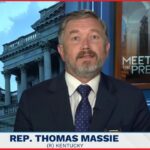 Appearing on NBC’s Meet the Press to promote his character and principled superiority to all other congressional representatives, the professional political narcissist, Thomas Massie, pledges to create as much turmoil as possible in his final seven months. Video and Transcript Below: {TRANSCRIPT} – KRISTEN WELKER: And joining me now is Republican Congressman Thomas Massie of […]
The post Sunday Talks – Defeated Thomas Massie Promises to Keep Shouting at Trees Until MAGA is Defeated appeared first on The Last Refuge.
Pages
Rune Hammer Feeds
