
An Alternative News Aggregator
News of the Day
“Glory to God in the highest heaven, and on earth peace to those on whom his favor rests.”
- Luke 2:14
Victor Davis Hanson: Could France’s Crisis Happen in America?
Editor’s note: This is a lightly edited transcript of today’s video from Daily Signal senior contributor Victor Davis Hanson. Subscribe to our YouTube channel to see more of his videos.
This is Victor Davis Hanson for the Daily Signal.
In the news right now, it’s rioting in France, rioting in Belgium, rioting in Italy, rioting in Albania, with other countries experiencing threats to riot. Who are these people? Well, they’re supposedly students that are angry that their classrooms or their education is not competitive or it’s subpar.
They’re socialists that are driving the unrest, but especially they’re immigrants. And let me just say at the outset, it’s very common among the Left in the West, in Europe, Canada, the United States, to immediately bash anybody who criticizes immigration. But the Left is the party that created this problem because most people who are centrist or independents or on the right approve of immigration with a qualifier.
It has to be legal. It has to be diverse from all over the world, not just from Africa or south of the border or Asia. It has to be measured so, in some fashion, the people coming in are not a million, two million, three million a year. They have to be in the thousands that can be acculturated, assimilated and integrated, because if they’re not, then what’s over there comes here—and not what over there comes here and becomes West; it brings that culture into the West.
Now, another thing to remember is it has to be meritocratic. Everybody wants to come to the West, and to the degree that Western nations say to those in Africa and Asia and the Western Hemisphere, “We can’t accommodate everybody. We have a few for refugees. We have a few from family reconciliation.
“We have a few from people that have outstanding talent, but we have to have the majority speaking the native language, willing to acculturate, and most importantly, have skills and be self-supporting so they don’t burden the social welfare system at the expense of U.S. citizens.” That’s not happening in Europe right now.
It’s not happening. The historic Limoges Town Hall in Limoges, France, is burned down. It’s toppling. If you go to Marseille, you often see the historic statue of Marianne. She’s the symbol of the French Republic, a statue.
It’s been defaced and is threatened with destruction. At Lyon, they destroyed a 175-year-old town hall. One of the most impressive Gothic churches in all of Europe is the Duomo, the Duomo in Milan, and they’re right outside burning and rioting, right outside.
So what is driving this coalition? Who’s doing this?
Why are they angry? Well, we have a very strange phenomenon happening. In Western countries over the last two decades especially, about 15%, up to 20%, are first-generation immigrants. I mean, they are first-generation, and they do not come from European countries. Some of them come from one country to another, but most of them are from the Middle East, Asia, Africa and the Western Hemisphere.
And what’s happening is they come at a time where the West is in crisis, and it does not believe that its culture and civilization is superior to the alternative. So there’s no state effort to assimilate, to acculturate, to integrate, to teach people about Greece and Rome, or the medieval period, or the Renaissance, or the Enlightenment, or the Founding Fathers here in the United States.
Or whether you’re left or right, Rousseau or Voltaire or Shakespeare or Plato, none of that.
In fact, it’s just the opposite: that people are coming because they have rejected with their feet their own culture, and yet they are praised as the other, as if their cultures, which are failed and which have driven them out, are somehow superior.
And therefore, they can retain their own cultural identity within a Western nation, with the caveat that they also will be protected by Western security, given Western freedom and have Western economic prosperity that they didn’t have in their own country.
This is not sustainable. It’s not sustainable. This new alliance between socialist immigrants and Islamists. We’re seeing it in the U.S. as well. We see all of these candidates that are running for Congress, for state office, for Senate, mayor of New York, and they have nothing good to say about the United States.
They have a lot of good to say about the countries that are illiberal, from which they came and to which they under no circumstances want to go back.
The iconic moment in the United States was the protesters in Los Angeles who were here illegally, and they were waving the flag of the country under no circumstances they wanted to go back to and burning the flag of the country under every circumstance they wanted to stay in.
Now, there are geostrategic implications of this. We are becoming estranged from Europe. Europe is becoming estranged from Europe. Prime Minister Georgia Meloni in Italy just unleashed a diatribe against the French president, Emmanuel Macron. And she said he was responsible for opening the borders of Europe and beginning this suicide pact in which European countries now have 15% to 20% to 25% first-generation immigrants.
But the key number is first- and second-generation, because unlike past immigration waves, the second generation, those born to immigrants, are not acculturating very well. And that’s the key indicator.
In Canada, it’s 45% first- and second-generation. In Australia, it’s nearly 50%. And across Europe, it averages about 25% to 35% of the entire population is either first- or second-generation immigrants.
And as we see now, it’s an unsustainable proposition because they do not want to accept the culture in which they fled to. They want its benefits, but they want to take it over culturally or socially or politically. And when I say it’s not sustainable, the welfare cost of European nations, especially Northern and Western European nations, is about 40% of their entire budget.
It’s over 30% in many countries of their total GDP, and that is money that is given to people who are not able to support themselves in this socialist utopia.
But it’s even worse than that: it’s not sustainable for the taxpayer, but it fuels the resentment of the taxpayer. In other words, it’s this strange phenomenon of human nature.
The more you give someone, the more they interpret that as weakness to be exploited and not magnanimity to be reciprocated in kindness. That’s part of the root of the entire problem. But, as I said, it has geostrategic problems because Europe’s energy program is in shambles. The U.K. and Germany have wrecked their economies by warring on nuclear power and fossil fuels. Wind and solar are not compatible with a dynamic economy as the primary sources of energy. Energy costs in Germany or the U.K. are double, triple and, in some parts, quadruple ours.
Fertility is 1.35 across Europe on average. Only Donald Trump’s anger and bombast and barrages of rhetoric have allowed Europe to spend 2%, a measly 2% of GDP, on defense. But they have promised to go to 5%. It will be impossible for them to go to 5% with the energy policies they have, with the fertility rates that are so low, with an indigenous population that is aging and shrinking, and borders that are not secure, and immigrants who see them as decadent and weak and ripe for exploitation. You can see the geostrategic ramifications in the war in Ukraine and Iran.
Why did the U.K. let out terrorists who were scouting a Royal Air Force NATO base where we had 11 B-1s? And they were essentially conducting a milk run or a dry run on how to destroy three and a half billion dollars of U.S. bombers. And what did the U.K. do? They let these people out on bail. They let them out on bail.
Why is it that in so many Northern European and Western European countries, when immigrants commit crimes, they do not face the same level of punishment as indigenous people? In the U.K. as well, why is it that these countries would not allow the United States to use their airspaces or their bases when we wanted to hit the nuclear facilities in Iran?
And the answer to all these questions is they are terrified, not just that they have 15% to 25% immigrant populations, not just that they have 30% to 40% first- and second-generation immigrant populations, but because they have immigrant populations that don’t like them and don’t want to integrate and feel that Islam or the autocratic method is superior.
And I’ll end on two notes. The West is unique. It’s so self-critical, and it’s so hospitable to immigrants that no other country follows this pattern. China has 1.4 billion. They don’t let people into their country. Japan is 99% indigenous population. Russia would not hear of this. Some of our closest allies, South Korea or Taiwan, they don’t do this.
We in the West are unique, and yet we suffer the wage of being unkind to immigrants from the very countries that would never allow it, for the very reasons that they’re seeing what’s happening in the West. Second and last, we’re not far behind. We have 16% to 17% first-generation, and we have about 25% first- and second-generation.
About 70 million people have either not been born in the United States or their parents weren’t born here. And we are not integrating and assimilating them and using the melting pot, partly because of the Left’s cultural revolution that they’ve taken over in institutions, and they are ashamed of their very culture, and they’ve used the word “cultural appropriation,” et cetera, and partly because the immigrants themselves refuse to give up their religion.
I’m not talking about their religion in the sense of private worship, but I’m talking about their religion as a state religion imposed on entire communities. That is a goal of many of the immigrants.
It’s not going to end well in the United States unless we take a look at what’s happening right now in Europe, and there’s no better time to take a look than before the midterm elections that are upon us in less than three weeks.
We publish a variety of perspectives. Nothing written here is to be construed as representing the views of the Daily Signal.
10 Halloween Decorations To Scare Your Liberal Neighbors

Halloween is more than just a great opportunity to score Snickers bars from your kids' baskets. It's also the chance to deck out your lawn in a way that strikes terror into the hearts of any liberal who walks by!
One Dead, One Wounded, After Shooting Near Ohio Mosque
One person is dead and another person wounded following a shooting around 2:10 p.m. near a mosque in Columbus, Ohio.
The post One Dead, One Wounded, After Shooting Near Ohio Mosque appeared first on Breitbart.
SCOTUS Takes Up Cases On Race and School Admissions, Federal At-Home Distilling Ban
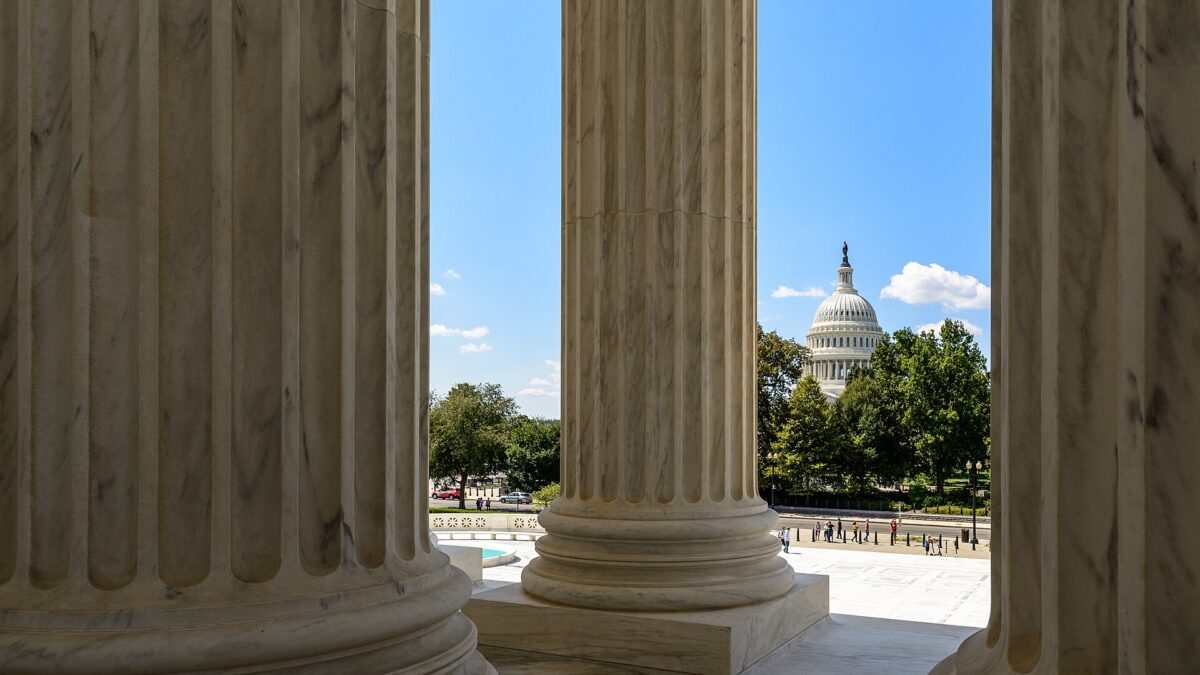 The U.S. Supreme Court added to its 2026 docket on Monday two high-profile cases dealing with race and school admissions and a Reconstruction-era federal ban on at-home distilling. In its latest order list, the high court revealed that it has agreed to take up and hear arguments in Association for Education Fairness (AEF) v. Montgomery […]
 Democratic Socialist of America Member Angie Nixon Attacks JD Vance 'with His Eyeliner': 'My Ancestors Helped Build This Thing'
Democratic Socialists of America (DSA) candidate Angie Nixon is attempting to demonize Vice President JD Vance yet again.
The post Democratic Socialist of America Member Angie Nixon Attacks JD Vance ‘with His Eyeliner’: ‘My Ancestors Helped Build This Thing’ appeared first on Breitbart.
Sen. Slotkin Says Students Should Think Twice Before Working for Trump
During an exchange at the University of Chicago, Sen. Elissa Slotkin, D-Mich., suggested that future prosecutions of Republican political leaders should discourage young conservatives from pursuing careers in politics.
“I want young people coming out of school to say, should I go work for the Trump administration?” she said during an Oct. 13 event.
“I want them to be like, Lord, that might be buying myself a ton of problems that I don’t want, and so let me avoid participating in that,” she continued. “I want that deterrence message.”
When I accepted an invitation to become a Pritzker Fellow at the University of Chicago’s Institute of Politics, I knew exactly what I was walking into. I—a two-time Trump White House alumnus was entering an institution overwhelmingly liberal in its leadership, culture, and student body. But I accepted the invitation anyway.
I did not do so because I expected to bring about any kind of dramatic change, but because I believed something increasingly rare in American politics: People who disagree should still be willing to sit across from one another and have a conversation.
That conviction is why I found Slotkin’s recent remarks so troubling. It is also why I am so disheartened seeing conservative students on campuses across our nation retreating.
The University of Chicago prides itself on intellectual freedom and vigorous debate. Its Institute of Politics, which hosted the Slotkin event, is supposed to expose students to competing perspectives and inspire the next generation of public servants. It’s an admirable mission. Unfortunately, there was a considerable gap between that aspiration and my experience working with contemporary college students.
By my observation, roughly 90% of students attending the programming leaned left. In my seminars, the contrast was striking. Here I was, a supporter of President Donald Trump who was raised in a working-class, single-parent, minority household, sitting across from students who often came from some of America’s most privileged communities. For some, I may have been the first unapologetic Trump supporter they had ever engaged with in a serious conversation. In addition, I am a member of a racial minority, and my background challenged their assumptions about who supports the president.
Today’s college students have spent much of their politically conscious lives in the Trump era. Their understanding of conservatism has been shaped by a hyperpolarized media environment that too often substitutes caricatures for conversations. They knew what leftist commentators say about Trump, but now they had the chance to sit down with someone who supported him, worked for him, and could explain why.
To be clear, my seminars weren’t campaign rallies; they were opportunities for students to challenge me, ask difficult questions, and hear a perspective they rarely encountered. I didn’t need them to agree with me. I simply wanted to help them understand that disagreement doesn’t require contempt.
I wanted to prove that Americans with vastly different backgrounds and political convictions could engage one another without treating the other side as an enemy.
What troubled me most wasn’t that the campus leaned liberal—students, like any other Americans, are entitled to their beliefs. What worried me was the apparent reluctance of conservatives to defend or even express their views.
When students believe their political convictions could invite social isolation, reputational damage, or professional consequences, many simply stop speaking, refraining from raising their hands or joining political organizations. Some who were previously intent on public service may reconsider whether it is worth the hostility.
Slotkin’s remarks didn’t create this chilling effect. They reinforced a problem that was already present at colleges and universities throughout the country. When a United States senator positively discusses the prospect that prosecutions could discourage young conservatives from entering politics, she sends a message.
Slotkin and I agree that no public official is above the law. Genuine criminal wrongdoing deserves accountability, regardless of party.
But what she describes sounds much less like equal justice than it does politically motivated prosecution used as a deterrent against conservatives.
Universities should be among the last places where Americans feel pressure to conceal their political convictions. Yet meaningful bipartisanship was too often an aspiration rather than a reality during my own experience. Inviting an occasional conservative fellow or speaker is not the same as cultivating a genuinely collegiate institution that values the contributions conservatives can make.
Intellectual diversity requires leadership willing to challenge its own ideological comfort zone, welcome competing perspectives, and ensure conservative students feel just as empowered to participate as their liberal classmates.
I encountered thoughtful students who challenged me and demonstrated genuine intellectual curiosity. Those exchanges were the most rewarding part of my fellowship. But they also reinforced how desperately our country needs institutions willing to facilitate these conversations rather than retreat into ideological conformity.
I served President Trump proudly, twice. I worked alongside talented Americans who sacrificed professional opportunities, personal privacy, and time with their families because they believed in serving their country. Young Americans who want to serve our nation should be encouraged, not intimidated.
Conservative students on campus have long been implicitly told in a hundred ways to keep their heads down. Slotkin just said it out loud.
American universities shouldn’t have to teach students which political views are safe to hold. They should be teaching them that their country is worth serving, even when the people sitting across the table disagree.
We publish a variety of perspectives. Nothing written here is to be construed as representing the views of the Daily Signal.
Macron Orders Curfew in Primary Tourist Regions of Paris to Stop Discussion of Riots, Arson and Looting
 In an optically smart move by French authorities, the main shopping and tourist regions of Paris are now under a localized curfew as police try to stop the riots, arson and looting – yet maintain the important tourism aspect. Other towns in France are also ordering curfews in the districts with the spreading violence. CBC […]
The post Macron Orders Curfew in Primary Tourist Regions of Paris to Stop Discussion of Riots, Arson and Looting appeared first on The Last Refuge.
Steelers-Saints Game In Paris Still On Despite Riots, NFL Says
Donald Trump Appears in Northern KY to Campaign for Ohio Candidates
While President Donald Trump appeared in northern Kentucky on Saturday, Ohio candidates running statewide and those in the Cincinnati area received some love as well.
As he’s done for his previous rallies, Trump asked attendees to vote as if he were on the ballot, since that increases turnout and Republicans do well.
“In this election, I’m asking you to pretend that I’m on the ballot because when I’m on the ballot, the stats are amazing. When I’m on the ballot, we always won,” Trump said early on in his remarks.
Referring to what he called “the most important midterm in the history of our country,” Trump warned the crowd that while his administration has “gotten more things done,” Democrats “can undo them if we start losing an election, especially this one.”
He also reminded attendees of the dangers the country faced from inflation and illegal immigration especially when Democrats were in charge of Congress, and how such dangers could return if they regained control.
Ohio’s special election for the U.S. Senate is between Republican Sen. Jon Husted and former Democrat Sen. Sherrod Brown.
Trump applauded Husted’s record thus far in Ohio and in the U.S. Senate, with Husted having served as lieutenant governor before being appointed to fill now-Vice President JD Vance’s vacancy. The president highlighted even more so Husted’s time playing football at the University of Dayton. Teammate and former NFL coach Jon Gruden even touted Husted’s skills, when a surprise guest at an Oct. 3 rally in Vandalia, Ohio.
Husted later told the Daily Signal that he believes Gruden’s appearance helps his chances. Trump also credited Gruden with helping him get to know more about the senator.
“He’s a great guy, respected. He’s been a lieutenant governor for long time in Ohio, respected by everybody, but he’s a humble guy,” Trump shared about Husted. “And I had no idea about him because I’ve always liked him, but he was very quiet and respectful and very like a perfect person, good-looking guy, but he was low-key,” Trump said.
He described how surprised he was to see Gruden campaign there for him, and to hear about Husted’s football record as “the best player on the team” and an “all-American.”
“Wait a minute, is this the nice guy that I see around all the time? Like he’s just a really respected, but humble guy,” Trump shared, stressing how good a football player Husted was as “an all-American.” While Husted might not brag, Trump said he would if he had that record.
In praising Husted’s physique, Trump mentioned that Husted has gone up in the polls and has “a really good chance” of beating Brown, whom he referred to as “a very bad candidate” and “a failed senator,” to boos.
Brown lost to now-Sen. Bernie Moreno in 2024 and is seeking a comeback. Husted and his supporters, including Trump, have been hammering Brown’s record during his decades in office.
“He’s been in for years, and they threw him out. We had Bernie Moreno do a good job, but they threw him out. But Jon Husted should do well. He should do well. And we’ll see what happens,” Trump shared.
Recent polls have shown a shift in favor of Husted over Brown, including from Rasmussen Reports, where he leads 49% to Brown’s 47% with likely voters, and ActiVote, where Husted has 50.2% to Brown’s 49.8% with likely voters.
Ohio’s 1st Congressional District is just across the Ohio River from northern Kentucky. There, Republican Eric Conroy is running against Democrat Rep. Greg Landsman. Trump praised Conroy’s “phenomenal” references.
When Trump called Conroy up to the stage, the Republican candidate stressed that “America is on the ballot this year,” as he called for everyone to turn out in Ohio and Kentucky “to conserve and preserve our America First agenda.”
The Air Force veteran and former CIA case officer also warned about high support for socialism among Democrats. “Folks, this is not America. This is not us. It’s time to put a stop to it,” he continued, as he once more stressed the need for voter turnout.
Trump and Vance are both appearing at multiple rallies this week in key swing states. Vance will be in Cincinnati on Wednesday. Trump touted his rally appearances, adding a special mention for Ohio, as he spoke to “the spirit of such events” and how “something’s happening” with these rallies.
“They’re all watching. Ohio is watching, and this is the same thing. This spirit is so incredible. It’s infectious,” Trump shared, though he did note how people “were talking about the blue wave.” Trump acknowledged that Republicans are “at a disadvantage” given that the party of the president in power tends to lose seats.
“We are putting it all out on the line,” Trump said, and that if Republicans don’t succeed, “they’re going to go get me.”
The president also predicted he “will get absolutely no credit” if Republicans do win. “They’ll say the candidates were spectacular. But what the hell? I have to do it anyway.”
Florida Democrat Arrested After Threatening to Behead Fellow Dems Who Don’t Support DSA Senate Candidate Angie Nixon
Money Talks When Money Walks
This November, California voters will decide whether a fraction of the state’s population should pay a 5% wealth tax to help fund public programs. Proposition 40 would make roughly 200 of the richest Californians bail out the state’s deficits and save the budget for another year of easy spending.
California is not the only blue “paradise” with this plan. Nationwide, at least 10 Democrat-run states facing pressure to deliver on promises to expand welfare programs have reflexively reached for the wallets of the wealthy. The appeal is obvious: These taxes fall on relatively few voters, while the resulting revenue can finance programs benefitting a far larger population.
However, taxing the rich is not a “get out of debt free” card. It’s a way for states to ignore their own financial mismanagement while forcing their highest earners and most profitable businesses to pick up the slack. When progressive taxes push high earners to relocate to more business-friendly states, they take with them investments, charity, productive businesses, job opportunities, and taxable income.
Despite these consequences, a wave of income tax revisions is hitting blue states. Connecticut Democrats aim to raise the top marginal rates to 7.5% for earners over $250,000 and 7.99% for those making over $500,000. Michigan’s ballot proposal would levy a 5% tax on individual income over $500,000. New York City Mayor Zohran Mamdani proposed a 2% income tax increase on residents making $1 million, creating a top marginal rate of nearly 17%. Rhode Island has even approved a 3% surtax on income above $1 million.
Although taxing the rich may appear to be an attractive source of revenue for government officials, it comes at a cost. Massachusetts provides perhaps the best test case.
In 2023, Massachusetts placed a 4% surtax on taxable income over $1 million, indexed annually for inflation. With a new top marginal rate of 9%, Massachusetts raked in $3.4 billion in 2026. Despite extra revenue from residents who stayed, out-migration from the state pulled $4.2 billion in adjusted gross income in 2023. When tax policy creates a hostile environment for economic growth, wealth flight is just a matter of when, not if.
Washington similarly distinguished itself as one of the few states without a tax on wages and salaries, making it comparatively attractive to high earners and entrepreneurs. But in recent years, the state made significant changes to its approach to taxation. Most notably, Gov. Bob Ferguson’s new 9.9% millionaire tax, effective 2028, has intensified concerns within the state’s business community.
Moment CEO Marc Barros moved his mobile photography gear company to Wyoming because he could no longer afford the cost of operating in Washington. Venture capitalist Aviel Ginzburg even said that more than a quarter of the roughly 100 limited partners in his fund have redomiciled amid Washington’s tax increases.
Though wealth flight is often trotted out as proof that the rich are selfish, in reality they already pay more than their “fair share” into the social welfare system. According to the latest available IRS data, the top 1% of earners paid 38.4% of federal individual income taxes in 2023, while the top 50% paid 96.7%. This trend is true across states like California, for instance, where the Hoover Institution estimates that the top 1% of earners paid 40% to 50% of the state’s income taxes in recent years.
This creates a paradox for high-tax big-spender blue states: The more heavily they tax and depend on a small pool of high earners, the more vulnerable their budgets become. For example, California was forced to cut its revenue forecast by $1.9 billion in 2016 and revise its budget plans due to weak income tax collections from high earners. In 2023, the state still had a $32 billion budget shortfall.
When a small group supplies a disproportionate share of a state’s tax revenue, a slowdown among those taxpayers can quickly become a fiscal crisis.
Political leaders are entrusted with the power to levy fair and necessary taxes, but the lines of fairness blur when ballooning welfare programs redistribute the income of more productive members of society to less productive members. Governments can always fabricate reasons why they want more money, but a better metric is whether they truly need it.
Nine U.S. states, including Florida and Tennessee, do not impose state income taxes. Yet somehow they maintain economic and population growth without siphoning resources from taxpayers, widening deficits and debt, and driving away businesses.
Before imposing yet another tax on their citizens, state lawmakers should ask whether existing revenue is being spent effectively and whether additional tax-financed spending is necessary—especially since high earners are often choosing to move to tax environments that don’t punish success.
States may have the authority to tax their wealthiest residents and most profitable businesses, but they cannot force them to stay. That’s the lesson: Governments must recognize that they can’t tax what is no longer there.
Pages
Rune Hammer Feeds
